

Mahamrityunjay Mantra Decoded: Line-by-Line Meaning in Hindi & English — The Ancient Science of Conquering Death (2026 Guide)
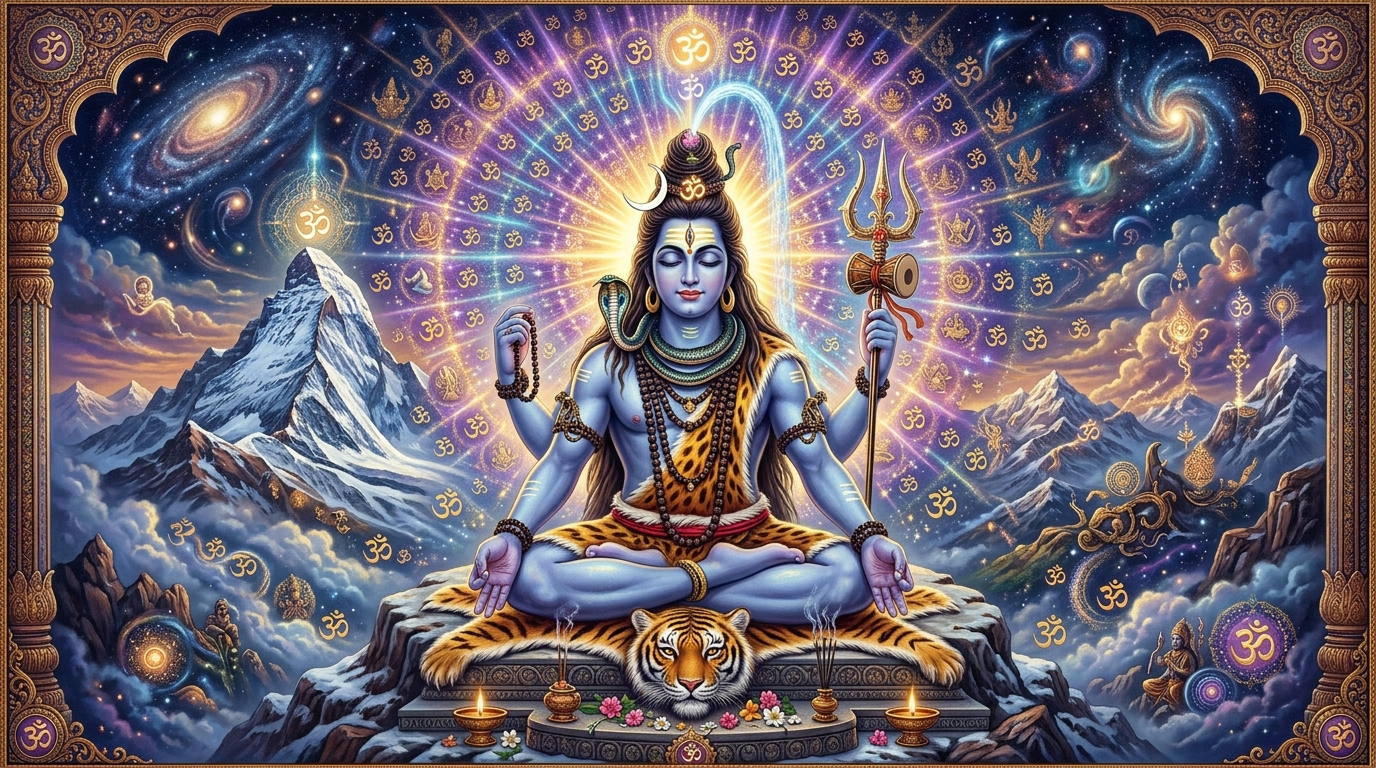
🙏 The Mahamrityunjay Mantra is not a prayer against physical death — it is a technology for conquering the fear, ignorance, and bondage that make us feel dead while still alive. Originating from the Rig Veda (7.59.12), this 32-syllable invocation to Lord Shiva — the Three-Eyed One — is considered as powerful as the Gayatri Mantra itself. In this definitive 2026 guide, we decode every word, every syllable, every hidden layer of this sacred mantra through the lens of story, Vedantic philosophy, and modern psychological insight.
🔱 What Is the Mahamrityunjay Mantra? The Name Itself Is a Map
Before we dive into the mantra, let us decode its very name. Maha means “great.” Mrityu means “death.” Jaya means “victory.” So Mahamrityunjay literally translates to “The Great Victory Over Death.”
But which death? In Sanatan Dharma, there are three kinds of death the seeker must conquer. The first is physical death — the fear that the body will perish. The second is psychological death — the daily dying we experience through anxiety, depression, ego-collapse, and loss. The third and deepest is spiritual death — the state of living entirely identified with the material world, disconnected from one’s true nature (Atman).
The Mahamrityunjay Mantra addresses all three. It is simultaneously a prayer for physical health, a shield against psychological suffering, and a vehicle for spiritual liberation (Moksha).
This mantra is also known by other names: the Rudra Mantra (referring to Shiva’s fierce form), the Tryambakam Mantra (referring to the three-eyed one), and the Mrita Sanjivini Mantra (the mantra that restores life) — because it was the core of the life-restoring practice taught to the sage Shukracharya after severe penance to Lord Shiva.
📜 The Story of Rishi Markandeya — Where This Mantra Was Born
The most famous origin story of the Mahamrityunjay Mantra is the tale of Rishi Markandeya — and it is one of the most emotionally powerful stories in all of Sanatan Dharma.
Sage Mrikandu and his wife Marudmati were childless. They performed severe penance to Lord Shiva, who appeared and gave them a choice: they could have either a foolish son who would live a hundred years, or a brilliant, devoted son who would die at age sixteen. They chose the brilliant son. He was named Markandeya.
Markandeya grew to be extraordinary — wise beyond his years, deeply spiritual, and beloved by all. But his parents carried a secret grief, knowing that their son was destined to die on his sixteenth birthday. As the day approached, Markandeya sensed their sorrow and learned the truth.
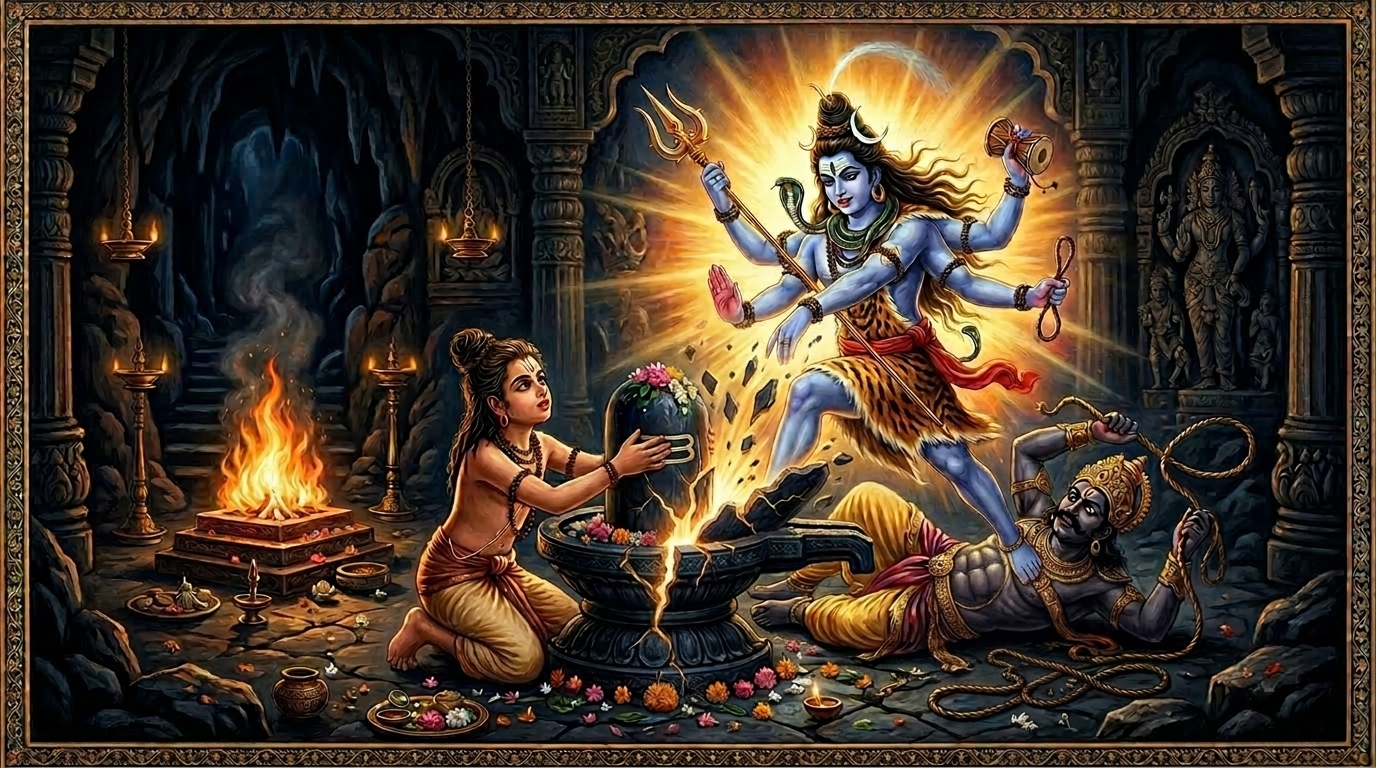
Instead of despair, Markandeya chose devotion. On the morning of his sixteenth birthday, he sat before a Shiva Linga and began chanting the Mahamrityunjay Mantra with absolute one-pointed focus. When Yama, the lord of death, arrived to take his life, Markandeya threw his arms around the Linga. Yama cast his noose — and it landed not just around Markandeya, but around the Shiva Linga itself.
At that moment, Shiva burst forth from the Linga in his most terrifying form — Kalantaka, the Ender of Death — and struck Yama down. He declared that Markandeya would live forever — a chiranjeevi, an immortal being. Death itself was conquered. Not by physical strength, not by political power, not by wealth — but by the purity of devotion and the vibration of this mantra.
The modern lesson: When you face what feels like an impossible deadline — in your career, your health, your relationships — the response is not panic. The response is to cling to your deepest truth (the Shiva Linga within) and channel every ounce of your being into that single point of focus. The noose of circumstance cannot bind one who is anchored to the eternal.
🕉️ The Complete Mantra — In Devanagari, Transliteration, and Translation
ॐ त्र्यम्बकं यजामहे
सुगन्धिं पुष्टिवर्धनम् ।
उर्वारुकमिव बन्धनान्
मृत्योर्मुक्षीय माऽमृतात् ॥
Om Tryambakam Yajamahe
Sugandhim Pushtivardhanam
Urvarukamiva Bandhanan
Mrityor Mukshiya Maamritat
“We worship the Three-Eyed One (Lord Shiva),
Who is fragrant and who nourishes all beings.
As a ripe cucumber naturally detaches from its vine,
May we be liberated from death, but not from immortality.”
🔍 Line-by-Line Deep Decoding
The Mahamrityunjay Mantra contains four lines (padas), each with eight syllables — a total of 32 syllables. Each line is a complete philosophical teaching. Together, they form a roadmap from worship to liberation.
🔸 Line 1: ॐ त्र्यम्बकं यजामहे | Om Tryambakam Yajamahe
ॐ त्र्यम्बकं यजामहे
Om Tryambakam Yajamahe
“We worship the Three-Eyed One.”
Word-by-Word Meaning:
• ॐ (Om) — The primordial sound, the vibration from which the entire universe emerged. Om is not just a syllable — it is the sound of consciousness itself. Before you can approach any deity, you must first attune your frequency to the cosmic frequency. Om is that tuning fork.
• त्र्यम्बकं (Tryambakam) — “The Three-Eyed One.” Tri = three, Ambakam = eyes. This refers to Lord Shiva. But what are the three eyes? The left eye represents the moon (emotion, intuition, the feminine). The right eye represents the sun (intellect, logic, the masculine). The third eye, in the center of the forehead, represents fire — the fire of wisdom that burns through illusion. When Shiva opens his third eye, the world of maya (illusion) is destroyed. By invoking Tryambakam, we are asking for the activation of our own inner third eye — the capacity to see reality as it truly is, beyond the dualities of pleasant and unpleasant, success and failure, life and death.
• यजामहे (Yajamahe) — “We worship, we adore, we sacrifice to.” This is first-person plural — we, not I. The mantra is inherently communal. Even when you chant it alone, you are chanting on behalf of all beings. The word yaj (to sacrifice/worship) is the root of the word yajna — the sacred fire ritual. Worship here means not mere lip service, but the offering of your entire being into the fire of devotion.
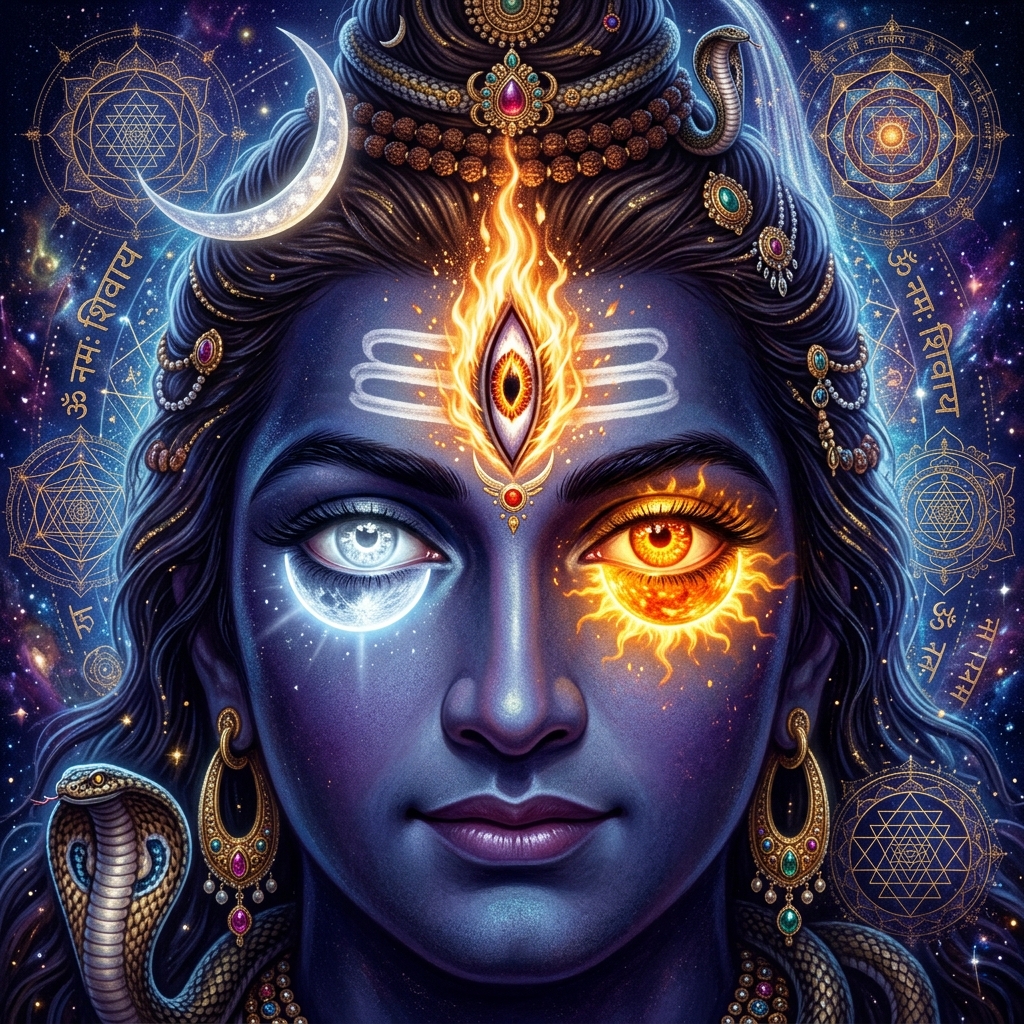
🧠 Modern Decoding: Line 1 establishes the foundation: before you can heal, before you can overcome fear, you must first see clearly. You must activate your capacity for discernment. In 2026, where we are drowning in information overload, fake news, and algorithmic manipulation, the prayer for the “third eye” is more relevant than ever. It is a prayer for clarity of perception in an age of manufactured confusion.
🔸 Line 2: सुगन्धिं पुष्टिवर्धनम् | Sugandhim Pushtivardhanam
सुगन्धिं पुष्टिवर्धनम्
Sugandhim Pushtivardhanam
“Who is fragrant and who nourishes all beings, causing them to grow and thrive.”
Word-by-Word Meaning:
• सुगन्धिं (Sugandhim) — “The fragrant one,” “the one of sweet fragrance.” Su = good, auspicious. Gandh = fragrance, smell. This is one of the most beautiful and overlooked words in the mantra. Why would Shiva — the ascetic who sits in cremation grounds, who smears ash on his body — be called “fragrant”? Because sugandh here refers not to physical perfume but to the fragrance of virtue, of good karma, of righteous living. Just as a flower does not need to advertise its fragrance — it simply IS fragrant, and the bees come naturally — a being established in truth radiates a spiritual fragrance that attracts everything good without effort. In Vedantic terms, sugandhi also means the one whose very presence is nourishing, whose darshan (mere sight) purifies.
• पुष्टिवर्धनम् (Pushtivardhanam) — “The one who nourishes, increases, and causes to thrive.” Pushti = nourishment, fullness, prosperity, well-being. Vardhanam = one who increases, one who makes grow. This is a compound word describing Shiva as the cosmic gardener — the one who tends to all of creation, ensuring that every being receives exactly the nourishment it needs to grow. This includes physical health, mental clarity, emotional stability, and spiritual evolution.
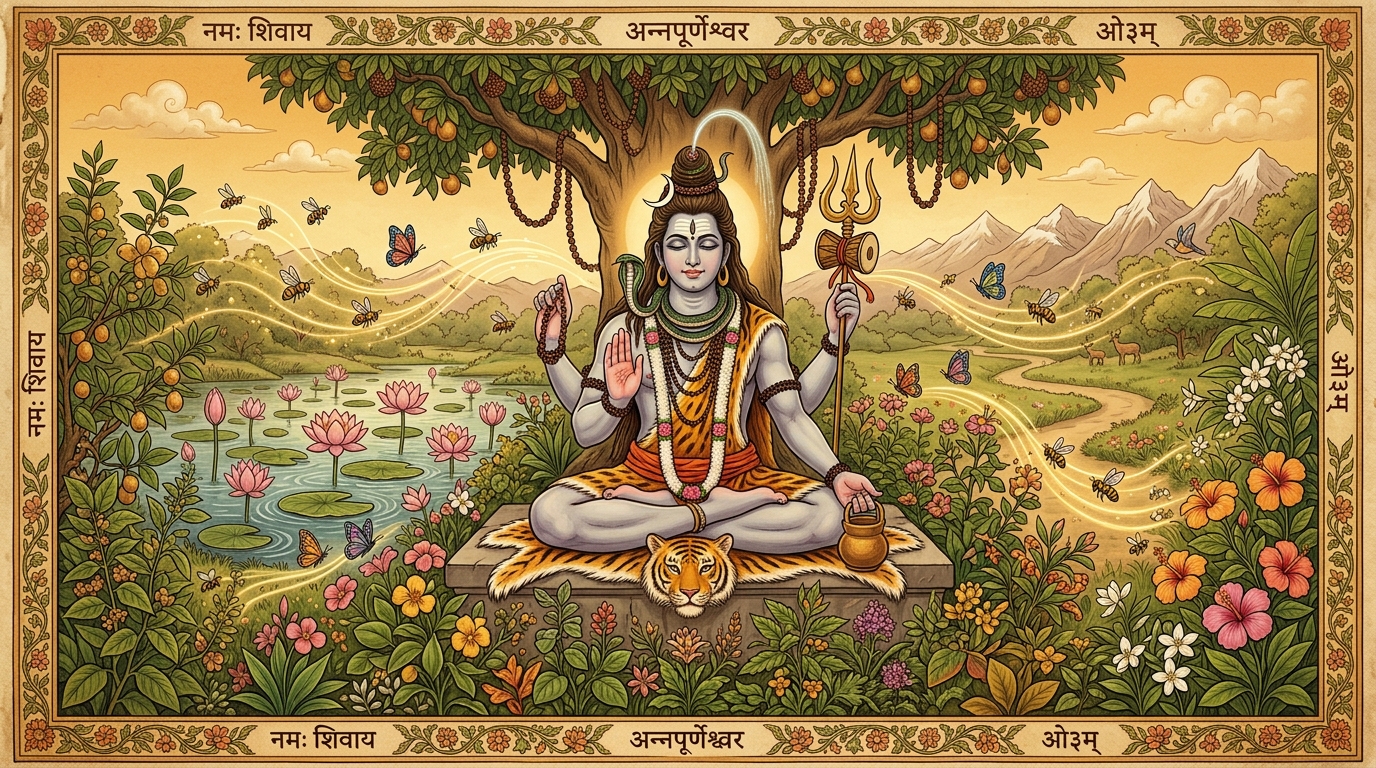
🧠 Modern Decoding: Line 2 tells us something revolutionary about the nature of the divine: God is not a distant judge or a fearsome tyrant. God is a nourisher. God is a gardener who wants you to grow and flourish. The divine fragrance is not earned through punishment and austerity — it is the natural state of a consciousness aligned with truth. For the modern professional struggling with burnout, this line is medicine: the universe is designed to nourish you, not drain you. The question is whether you are open to receiving that nourishment or blocking it with anxiety and resistance.
🔸 Line 3: उर्वारुकमिव बन्धनान् | Urvarukamiva Bandhanan
उर्वारुकमिव बन्धनान्
Urvarukamiva Bandhanan
“As a ripe cucumber naturally separates from its vine…”
Word-by-Word Meaning:
• उर्वारुकम् (Urvarukam) — A cucumber or gourd. Specifically, a ripe cucumber — one that has completed its full cycle of growth.
• इव (Iva) — “Like, just as.” This is the word that makes this line a simile — the most famous simile in all of Vedic literature.
• बन्धनान् (Bandhanan) — “From bondage, from the stem, from that which binds.” The root is bandh — to bind, to tie, to imprison.
🌿 The Cucumber Metaphor — The Deepest Teaching:
This is the line that transforms the mantra from a mere prayer into a profound philosophical teaching. Watch carefully:
A cucumber, while growing, is firmly attached to its vine. The vine is its source of nourishment — water, minerals, sunlight all flow through the vine into the fruit. Without the vine, the cucumber cannot grow. But there comes a moment — the moment of perfect ripeness — when the cucumber naturally, effortlessly, painlessly separates from the vine. No force is needed. No knife is required. No trauma occurs. The separation happens because the fruit is complete.
This is the metaphor for spiritual liberation. We are all attached to our “vines” — our bodies, our identities, our careers, our relationships, our possessions, our fears, our desires. These attachments are not evil — they are necessary for growth, just as the vine is necessary for the cucumber. But there comes a point in every soul’s journey when the attachment has served its purpose, when the fruit is ripe, and the natural next step is effortless release.
The key word is effortless. The mantra does not say “may I be ripped from the vine” or “may I cut myself free with violent austerity.” It says: like a ripe cucumber — naturally, organically, when the time is right. This is the Vedantic view of liberation: it is not a violent act of renunciation, but a natural maturation of consciousness.
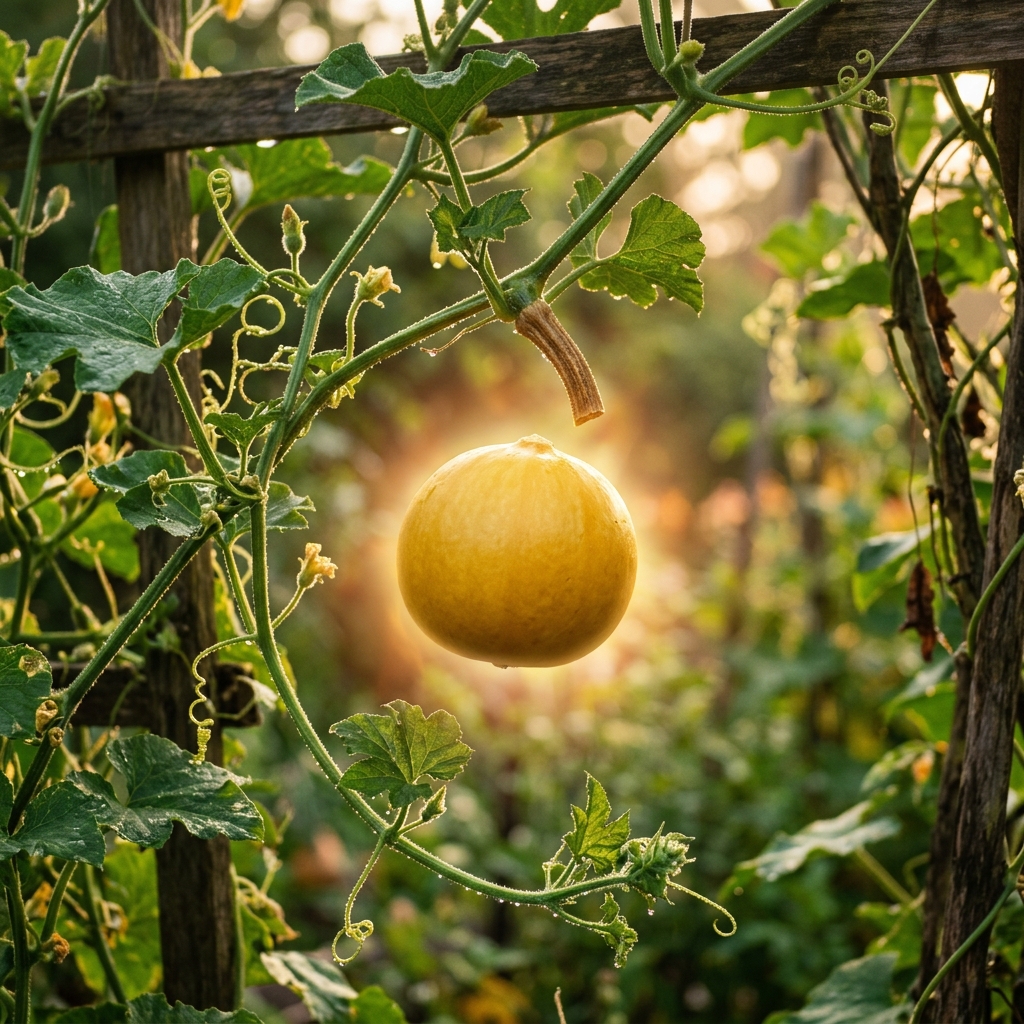
🧠 Modern Decoding: How do you know when to leave a job, end a relationship, or change direction in life? The cucumber metaphor gives the answer: when you have extracted all the nourishment that situation has to offer, when you have grown to completion within that context, the release will feel natural — not forced, not bitter, not traumatic. If letting go feels like violent tearing, you are not yet ripe. If it feels like a natural exhale, the time has come. This is profound career wisdom, relationship wisdom, and spiritual wisdom all in one agricultural metaphor from 3,500 years ago.
🔸 Line 4: मृत्योर्मुक्षीय माऽमृतात् | Mrityor Mukshiya Maamritat
मृत्योर्मुक्षीय माऽमृतात्
Mrityor Mukshiya Maamritat
“May I be liberated from death, but not from immortality.”
Word-by-Word Meaning:
• मृत्योः (Mrityoh) — “From death.” The ablative case — indicating separation from death.
• मुक्षीय (Mukshiya) — “May I be freed, may I be liberated.” From the root muc — to release, to set free. This is the same root as Moksha.
• मा (Ma) — “Not.” A critical negation particle.
• अमृतात् (Amritat) — “From immortality, from the nectar of deathlessness.” A = not, mrita = dead. So amrita = the deathless, the immortal, the nectar of eternal life.
🔥 The Most Misunderstood Line in All of Vedic Literature:
Read it again carefully: “Free me from death — but NOT from immortality.” Most people read this casually as “free me from death and grant me immortality.” But the Sanskrit is far more precise. It says Ma Amritat — do NOT free me from immortality. In other words: I am already immortal. My true nature (Atman) is already deathless. The problem is not that I lack immortality — the problem is that I have forgotten it. Death has trapped me in the illusion that I am mortal. Free me from THAT illusion — but do not, under any circumstances, separate me from the immortal truth that I already am.
This is the highest teaching of Advaita Vedanta condensed into three words. You are not a mortal being seeking to become immortal. You are an immortal being who has forgotten your own nature. The mantra does not ask Shiva to “give” you something you lack. It asks Shiva to “remove” something that doesn’t belong — the veil of ignorance (avidya) that makes the deathless appear mortal.
🧠 Modern Decoding: In 2026, as AI disrupts industries and economic uncertainty looms, the greatest fear is not physical death — it is professional death, identity death, relevance death. “What if I become obsolete? What if my skills don’t matter anymore? What if I lose everything I’ve built?” The fourth line answers: the part of you that is truly valuable — your consciousness, your wisdom, your capacity for truth — is immortal. It cannot be made obsolete by any technology. Free yourself from the fear of dying (in any form), but never disconnect from the immortal core that makes you who you really are.
🔬 The Science Behind the Sound: Why This Mantra Heals
Modern neuroscience and psychoacoustics research increasingly validates what Vedic sages knew millennia ago — that specific sound frequencies produce measurable effects on the brain and body.
The Mahamrityunjay Mantra’s 32 syllables create a specific pattern of vibration that activates the parasympathetic nervous system, reducing cortisol levels and shifting the brain from beta-wave dominance (anxiety, fight-or-flight) to alpha and theta-wave states (calm, meditative, healing). The repetition of the nasal consonant sounds (m, n) creates a natural humming resonance in the skull that stimulates the vagus nerve — the body’s primary relaxation pathway.
The structure of eight syllables per line creates a rhythmic pattern that naturally synchronizes breath with sound. Breath becomes slower, deeper, more rhythmic — and with it, heart rate variability improves, blood pressure normalizes, and the immune system strengthens. The ancient rishis called this mantra chikitsa (mantra therapy). Modern science calls it psychoneuroimmunology. The mechanism is the same.
🧘 The Complete Word-by-Word Reference
ॐ (Om) — The sacred primordial vibration of the universe
त्र्यम्बकं (Tryambakam) — The three-eyed one (Lord Shiva)
यजामहे (Yajamahe) — We worship, we adore, we sacrifice to
सुगन्धिं (Sugandhim) — The fragrant one, the virtuous, the supreme being
पुष्टि (Pushti) — Nourishment, fullness, well-being, prosperity
वर्धनम् (Vardhanam) — One who nourishes, increases, strengthens, restores
उर्वारुकम् (Urvarukam) — A ripe cucumber (or gourd)
इव (Iva) — Like, just as
बन्धनान् (Bandhanan) — From bondage, from the stem, from attachment
मृत्योः (Mrityoh) — From death
मुक्षीय (Mukshiya) — May I be freed, liberated (root of Moksha)
मा (Ma) — Not
अमृतात् (Amritat) — From immortality, from the nectar of deathlessness
📿 How to Chant the Mahamrityunjay Mantra — 2026 Practice Guide
Best Time: Early morning during Brahma Muhurta (4:00–5:30 AM) or during Pradosh Kaal (the twilight period after sunset). Mondays are considered especially auspicious for Shiva mantras, as are the 13th lunar day (Trayodashi) and Mahashivratri.
Recommended Counts: Begin with 108 repetitions using a Rudraksha mala. For specific healing or protection purposes, a purascharana (extended practice) of 1,25,000 repetitions over 40 days is traditionally recommended. During illness or crisis, even 11 sincere repetitions carry enormous power.
Posture and Setup: Sit facing East or North. Light a ghee diya (lamp) if possible. A Shiva Linga or image of Mahadeva before you helps focus the mind. Keep the spine straight, eyes gently closed, and the Rudraksha mala in the right hand.
Pronunciation Key: Vedic mantras rely on correct swar (tonal accent) for their full vibrational effect. The nasal sounds (the anusvara in words like Tryambakam, Sugandhim, Bandhanan) should resonate through the nasal cavity, creating a humming vibration in the skull. Do not rush — let each syllable land fully before moving to the next.
Mental Approach: Do not chant mechanically. As you say Tryambakam, visualize the three-eyed Shiva. As you say Sugandhim, feel the fragrance of divine grace. As you say Urvarukamiva, imagine a ripe fruit gently releasing from its vine. As you say Mrityor Mukshiya, feel every bondage — fear, anxiety, attachment — dissolving. This is not mere recitation; it is active visualization meditation.
🙏 When Should You Chant the Mahamrityunjay Mantra?
The Mahamrityunjay Mantra is particularly powerful in the following situations:
During illness: Chanting 108 times daily creates a healing vibration field. In Indian tradition, it is chanted for those on their deathbed, for premature births, and for anyone facing serious health challenges. The mantra’s resonance is believed to strengthen the life-force (prana) within the body.
During fear and anxiety: When confronting situations that feel like “death” — job loss, financial crisis, relationship collapse, public failure — the mantra directly addresses the psychological mechanism of fear. By repeatedly affirming victory over death, the mind’s fear circuitry is gradually reprogrammed.
During planetary afflictions: In Vedic astrology, the Mahamrityunjay Mantra is the primary remedy for Shani (Saturn) afflictions, Rahu-Ketu dasha periods, and the dreaded Sade Sati. It is considered the most powerful mantra for neutralizing the malefic effects of any planetary transit. For professionals navigating Saturn in Aries 2026 or the current Rahu-Ketu axis, daily recitation provides a stabilizing energetic anchor.
During transitions: Starting a new job, moving to a new city, entering marriage, retiring — every major life transition involves a kind of “death” of the old identity and “birth” of a new one. The mantra smooths this transition, making it feel like the natural release of a ripe cucumber rather than a traumatic tearing.
🔮 The Mahamrityunjay Mantra and Vedic Astrology
For astrological practitioners, the Mahamrityunjay Mantra holds a unique position. It is the universal remedy — applicable regardless of which planet is causing affliction. Whether the native is experiencing the heavy hand of Saturn, the confusion of Rahu, the detachment of Ketu, or the aggression of Mars, this mantra works as a cosmic reset button.
The mantra’s connection to Shiva means it operates at the Rudra level — the level where karma is both created and dissolved. Shiva is the lord of the Rudra Loka, and the mantra channels his transformative energy to dissolve karmic knots that manifest as illness, fear, and suffering in the material world.
For a personalized analysis of which mantras are most powerful for your specific birth chart, planetary periods, and current transits, book a consultation with Dr. Ananjan.
✨ Conclusion: The Mantra Is a Mirror of Your Own Immortality
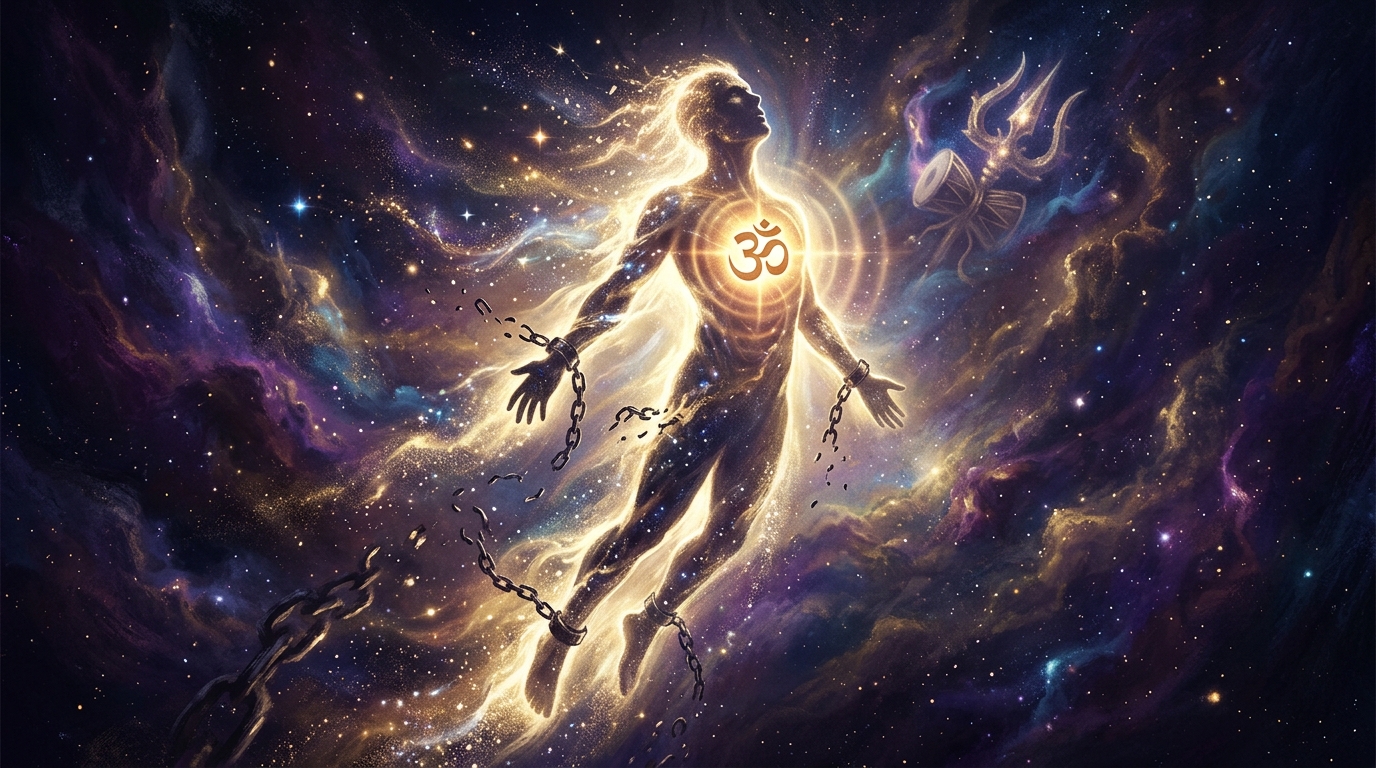
The Mahamrityunjay Mantra is not asking God for a favor. It is not begging for more years of physical life. It is doing something far more radical: it is reminding you of what you already are.
You are not a body that will die. You are consciousness temporarily expressing itself through a body. Death is real for the cucumber — but the vine, the earth, the sun, the water that created the cucumber continue forever. You are not the cucumber. You are the sun.
In 2026, as artificial intelligence replicates more and more of what we thought made us special — our writing, our analysis, our creativity — this mantra asks the ultimate question: what remains when everything that can be automated is automated? What is the immortal core of your being that no algorithm can replicate?
The answer is consciousness itself — Atman — the three-eyed awareness that sees past, present, and future simultaneously, that radiates virtue without effort, that nourishes everything it touches, and that was never born and can never die.
ॐ त्र्यम्बकं यजामहे सुगन्धिं पुष्टिवर्धनम् ।
उर्वारुकमिव बन्धनान्मृत्योर्मुक्षीय माऽमृतात् ॥
हर हर महादेव। 🙏🔱
Sources: This deep analysis draws from the Rig Veda (7.59.12), Taittirīya Saṃhitā, Shiv Purana (Markandeya legend), word-by-word Sanskrit analysis from Dharmapedia, Art of Living, ReSanskrit, Yoga Basics, and Vedantic philosophical interpretations. Content curated for Dr. Ananjan’s Astro Intelligence platform.
Related: AI Astrology Intelligence | Remedies & Healing | Hanuman Chalisa Decoded